
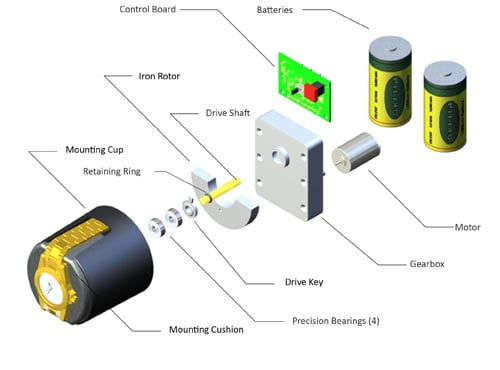
What is a watch winder? It’s a small motorized box that turns an automatic timepiece on a cradle while you aren’t wearing it, so the rotor keeps tightening the mainspring and the hands never stop. Think of it as a stand-in for your wrist, designed to keep automatic watches wound between wears. That matters most for pieces with a date, moon phase, or perpetual calendar that take minutes to reset.
Own one automatic and wear it daily? You probably don’t really need one. Rotate between two or more, or own a complicated timepiece, and it starts to earn its shelf space.
What Is a Watch Winder, Mechanically Speaking?
Inside the case are three parts: a rotating cradle, a small electric motor, and a control board that runs the programs. Power comes from an AC adapter, batteries, or both. You strap the timepiece around a soft cushion, seat it in the cradle, and pick a setting. The watch winder rotates in short bursts, rests, and repeats around the clock. It doesn’t set the time or service the movement; it only supplies the motion your arm would.
Single-position units hold one piece, while dual and quad models hold two or four, often with a separate program for each cradle.
Why an Automatic Stops When You Take It Off
An automatic watch stores its energy in a coiled spring called the mainspring. A half-moon weight called the rotor pivots on top of the self-winding movement. Every time your wrist moves, the rotor inside the watch swings, and reduction gears turn that motion into a little more tension on the spring.
Take it off and the motion stops. The spring keeps releasing energy through the escapement until the power reserve is gone. Power reserve is the number of hours a fully wound movement keeps running on its own; for most modern automatics it falls somewhere between about 38 and 80 hours. Leave one in a drawer over a long weekend and it will likely have stopped by Monday.
A stopped piece isn’t damaged. The annoyance is the reset. Even a basic three-hander with time and date means spinning the crown through every missed day. An annual or perpetual calendar takes real care to set, and on many calendar movements you shouldn’t change the date during the late-evening and early-morning hours, because the date wheels are already partly engaged and forcing them can break a tooth.
How the Box Keeps the Mainspring Wound
The motor turns the cradle a set number of times, then pauses. A good winder spreads those rotations across the day in cycles, a few minutes of turning followed by a longer rest, instead of spinning nonstop. Most winders are designed to rest far more than they turn, and the reason is simple: the mainspring only needs topping up, and every extra rotation is wear on the rotor bearing and winding gears with nothing gained.
Turns Per Day (TPD)
Turns per day, or TPD, is the number of full rotations the cradle makes in 24 hours. Most automatic watches require somewhere between roughly 650 and 950 TPD, though a few need more or less; the movement maker’s documentation or the winder maker’s lookup chart will tell you. Too few turns and the timepiece slowly drains its reserve and stops. Too many won’t hurt the spring (see below), but it adds wear for no reason.
Rotation Direction: Clockwise, Counterclockwise, or Both
Some movements wind only when the rotor spins one way; others wind in both directions. The Rolex Perpetual rotor, for instance, winds bidirectionally, while the Valjoux 7750 chronograph movement winds in one direction only. Set a unidirectional movement to spin the wrong way and nothing happens at all: the piece runs down while sitting on the cradle, and the owner blames the box.
Not sure which you have? Choose the bidirectional setting. It alternates direction, so at least half the turns always count, and you can raise the TPD a step to make up for the wasted half.
Who Needs a Watch Winder, and Who Doesn’t
A winder pays off when you own more automatics than you can wear in a week. A watch collector with multiple watches on rotation gets the most from it; someone with a single daily wearer gets almost nothing.
| Your situation | Worth it? | Why |
|---|---|---|
| One automatic, worn daily | No | Your wrist already keeps it wound |
| Two to four automatics in rotation | Often | Each stays ready to wear when you grab it |
| Annual or perpetual calendar | Yes | Resetting is slow and easy to get wrong |
| Quartz or hand-wound pieces | No | A battery or the crown powers them |
| Pieces worn a few times a year | Optional | Letting them stop is fine; wind and set before wearing |
A luxury watch saved for weekends sits in the middle. If you wear it every Saturday and its reserve is short, a winder saves you a reset each week. Some owners simply enjoy the ritual of winding and setting a piece by hand before they put it on, and that’s a perfectly good reason to skip the box.
If you’ve decided one makes sense, our rundown of the features that separate good units from cheap ones covers motor noise, programs, and build quality, and our guide on where to buy one compares the retail options.
Limits and Trade-Offs
What Is a Watch Winder Not Built to Do?
It can’t power a quartz watch, which runs on a battery, and it won’t help a hand-wound mechanical watch, which has no rotor and needs to be wound by turning the crown. It also can’t overwind anything. An automatic mainspring ends in a slipping bridle, a friction spring that lets it slip along the barrel wall once it’s fully wound, so extra turns just slip instead of adding tension.
The Real Costs of Keeping the Watch Running
The trade-off is wear and a little power use. Constant running means the rotor, its bearing, and the gear train work every day, which can modestly shorten the interval between services. A watch winder can’t damage a watch through overwinding, but it does add those miles. Some watchmakers argue that letting a piece rest is kinder to the oils; others say regular running keeps the lubricant from settling. Neither side has strong evidence, so treat it as a preference rather than a rule.
What spec sheets rarely mention is magnetism. A cheap, unshielded motor sitting inches from a hairspring can magnetize it, and the usual first sign is a piece that suddenly gains minutes a day. A watchmaker can demagnetize it in seconds, but a quality winder with a shielded motor avoids the problem in the first place.
First-Time Setup in Four Steps
- Charge the movement first. If it allows hand winding, give the crown 20 to 30 turns to wind the mainspring; otherwise wear it for a few hours. An automatic watch winder maintains a charge; it isn’t built to fill an empty spring quickly.
- Look up the TPD and winding direction for your caliber. The maker’s documentation or a published TPD chart will list both.
- Pick the lowest program that matches. Set the direction, then seat the cushion firmly so it can’t slip in the cradle.
- Check after a week. If the piece has stopped or is losing reserve, raise the TPD one step and check again.
So, what is a watch winder in practice? A convenience tool for people who own more automatics than they can wear. Start by looking up your caliber’s TPD and direction. Then run the lowest program that keeps the piece going for a full week. If it still stops, raise the turns one step at a time.
Frequently Asked Questions
Is it okay to leave a Rolex on a watch winder?
Yes. Rolex automatic movements respond to the cradle the same way they respond to your wrist, and the slipping bridle prevents overwinding. Use a bidirectional setting at the TPD listed for your caliber, and keep the box away from speakers and other magnets.
How often should I put my watch on a winder?
Only when you won’t wear your watch for longer than its power reserve. A piece you wear every day never needs one. A piece that comes out every week or two can live on the cradle between wears.
What are the disadvantages of winders?
The main ones are extra wear on the rotor and winding gears, electricity or battery use, faint motor noise on some models, and possible magnetism from unshielded motors. For a single watch worn daily, those downsides outweigh the benefit.
Does a winder need electricity?
Yes, every motorized unit needs power. Most run on an AC adapter, and many also accept batteries as a backup or for placement away from an outlet. Battery life varies widely by model and program.